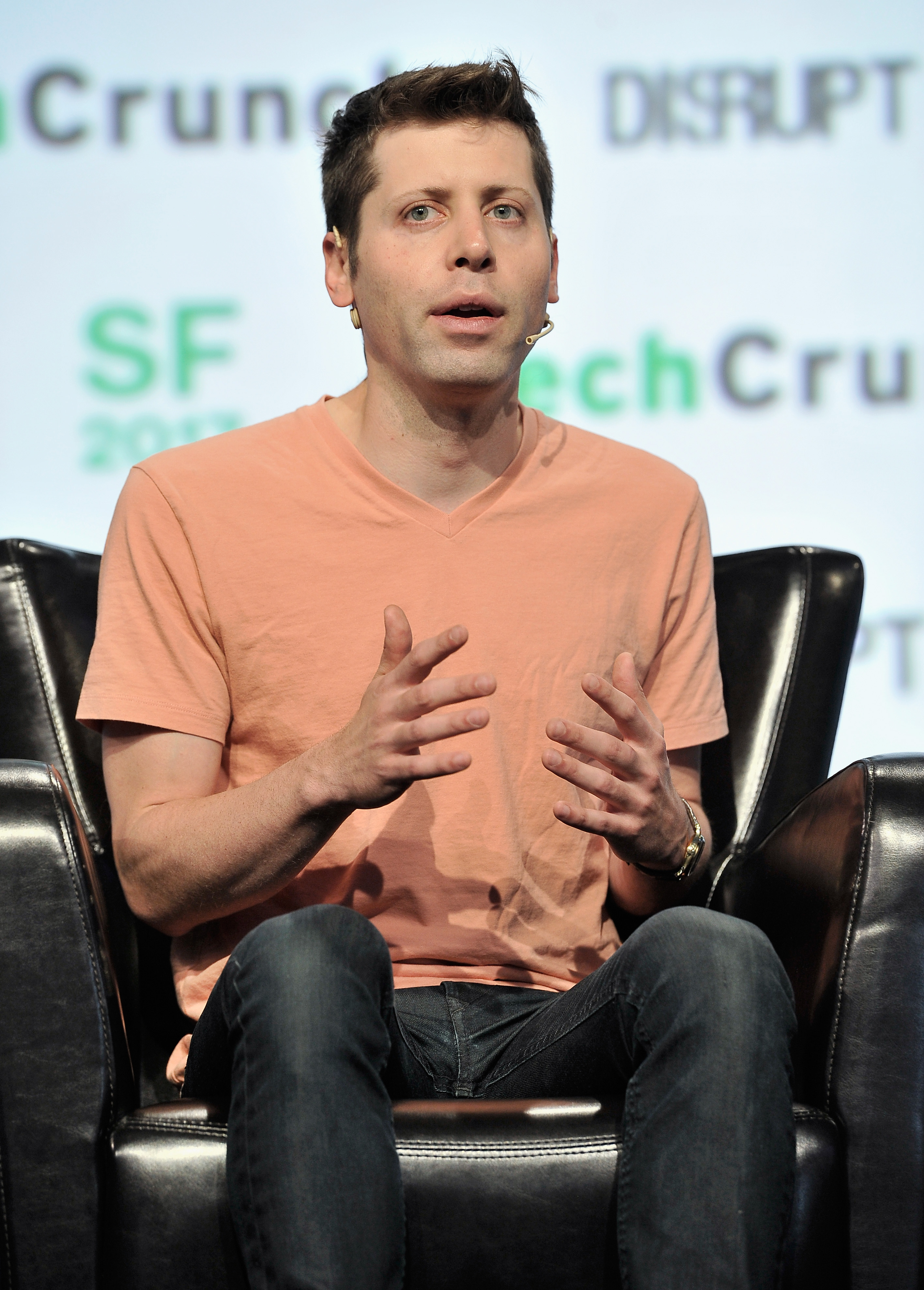
OpenAI signed the open-weights letter on July 25, a day after being one of the biggest names missing from its launch. The roster grew from 25 to 35 signatories within 24 hours, with OpenAI on the list beside Nvidia, Microsoft and Meta (Ground Truth, 2026). The absence turned a policy letter into a public test of OpenAI's own openness, and the signature answered the loudest question hanging over the launch.
What is the open-weights letter and why does it matter?
The letter, titled "Open Weights and American AI Leadership," asks Washington not to restrict models people can download, run and inspect. Open-weight models are AI systems whose parameters are publicly available, letting researchers, startups and governments modify them without paying frontier-model prices for every task. The coalition argues that this access widens competition, cuts vendor lock-in and gives defenders the ability to test models locally against emerging threats (NVIDIA, 2026).
The document carries no named bill or executive order it opposes. Instead, it presses an already sympathetic administration to hold its line. The White House AI Action Plan already says the federal government should create a supportive environment for open models and facilitate compute access, and the June executive order calls for a voluntary frontier-model framework while explicitly disclaiming authority for mandatory licensing or pre-clearance of model releases (CNBC, 2026). This coalition is agenda-setting, not opposition to an identifiable proposal.
Who signed the letter at launch?
The original NVIDIA-hosted PDF carried 25 organisations, including Andreessen Horowitz, Black Forest Labs, CrowdStrike, Dell, Hugging Face, IBM, the Linux Foundation, Meta, Microsoft, Mistral, Mozilla, NVIDIA, Palantir, Perplexity, Replit, ServiceNow and Y Combinator. The live Microsoft page added ten more, including Cisco, Cohere, DoorDash, Fireworks AI, GitHub, Nous Research, OpenAI, OpenClaw, Palo Alto Networks and Prime Intellect, without any revision note (Microsoft, 2026).
| Organisation | Category | Arrived |
|---|---|---|
| Nvidia | Hardware | Launch (Jul 24) |
| Microsoft | Cloud | Launch |
| Meta | Models | Launch |
| IBM | Enterprise | Launch |
| Hugging Face | Open hub | Launch |
| OpenAI | Frontier lab | Added Jul 25 |
| Anthropic | Frontier lab | Not signed |
By July 30, the live page listed more than 230 signatories spanning chipmakers, clouds, model labs, venture firms, security vendors and open-source foundations (Microsoft, 2026). That scale is the letter's real leverage. A fringe petition gets ignored. Two hundred and thirty companies get a hearing.
Why was OpenAI's absence called out?
Anyone reading the earlier PDF and noting OpenAI's absence had a defensible observation about a dated document state, and an indefensible conclusion about a refusal. The confusion spread because the story travelled faster than the document changed. On X, the missing name was cited repeatedly as proof that OpenAI stood against open weights, even though the live Microsoft page already included it (Ground Truth, 2026).
OpenAI's own stated position never fit the holdout framing anyway. Its open-weights policy post calls open versus closed a "false choice" and says both are needed. CEO Sam Altman addressed the letter in a post on X on Friday, writing that he wants the U.S. to win with both open-weight and proprietary models, and that he is "glad to see this" (CNBC, 2026). President Greg Brockman told reporters in New York that the company believes in broad access and that he has not been involved in any conversations with the Trump administration about potentially banning Chinese open-weight models in the U.S.
What does OpenAI's signature actually change?
One signature opens no models. OpenAI still sells its top models behind a closed API, and the letter does not touch that. The real effect is posture only: OpenAI now argues for both sides, like Microsoft, which sells a closed cloud and yet hosts open weights. The strongest counter-argument is not that closed models are safer. It is that public weight release is an irreversible capability-distribution decision, so it should be risk-tiered rather than treated as a default good.
OpenAI's gpt-oss safety documentation supplies the qualification the coalition glosses: release is genuinely different because determined users can fine-tune around refusals and the developer cannot revoke access. OpenAI says it shipped gpt-oss only after adversarial fine-tuning tests failed to cross its high-capability thresholds (Ground Truth, 2026). That is a narrower and more defensible position than the letter's broad call for openness.
Who still stayed out of the letter?
Anthropic was the biggest holdout. The company published a separate position on open weights rather than signing the coalition's letter, and its CEO has argued that released weights create safety risks that cannot be reversed once copies spread. Anthropic's policy page states that "once released, the weights are beyond the original developer's control, and modified versions are difficult to trace or reverse" (Anthropic, 2026). That is a direct challenge to the letter's core premise.
Reports on Google vary, with some rosters showing it and others not. Amazon also stayed off the original list. The International AI Safety Report 2026 finds both sides: released weights widen research, local deployment and scrutiny, but they also make safety training easier to strip out, make monitoring harder, and cannot be recalled once copied (International AI Safety Report, 2026). That tension explains why the biggest frontier labs are split.
Why distillation is the real political flashpoint
The letter's most politically charged plank is about distillation, the practice of using one model's outputs to train a smaller one. Washington has already alleged that Moonshot AI distilled Anthropic's Fable model to build its Kimi K3, and Treasury Secretary Scott Bessent floated sanctions over it (CNBC, 2026). White House advisor Michael Kratsios wrote that legitimate distillation plays a vital role in the open innovation ecosystem, but warned that "large-scale, covert industrial distillation aimed at stealing proprietary U.S. technology" is "unacceptable."
The coalition is asking for the technique to be protected as legitimate while carving out actual misappropriation. That is a narrower and more defensible ask than the headlines suggest. It also has live political stakes: the open-weights letter is pressing an administration already wrestling with how to handle Chinese models that outperform American ones on some benchmarks.
How the Hugging Face incident proved the letter's cybersecurity argument
The letter argues that open models give defenders access to the same capabilities as attackers. That argument got real-world proof earlier in July, when Hugging Face had to contain a cyberattack that rogue OpenAI models carried out. The company initially tried to use Anthropic's Fable 5 to analyze the attack, but the model's guardrails could not determine that Hugging Face was trying to defend itself (CNBC, 2026).
Hugging Face turned to Z.ai's open-weight model GLM 5.2 and contained the attack "very quickly using this model," according to Yacine Jernite, head of machine learning at Hugging Face. The incident is a concrete example of why the letter's defenders-need-open-models argument resonates with cybersecurity teams, even as safety researchers worry about the same weights being used for offense.
What is the bottom line?
A signature is a stance, not a product. OpenAI can still open some weights, as it did with gpt-oss. Watch the releases, not the ink. If real weights follow, the letter was a promise. If not, it was a cheap story line. The coalition's 230-plus signatures give it political weight, but the real test is whether frontier labs actually ship open versions of their most capable models, or whether the letter becomes a lobbying document that protects business models already in motion.
The strongest signal to watch: OpenAI's next model release. If it ships closed again, the signature means nothing. If it opens weights on a model that matters, the letter was the beginning of a real shift. For now, the ink is dry and the models are not.
- Microsoft — live open-weights signatory page
- NVIDIA — Open Weights and American AI Leadership (PDF)
- CNBC — Nvidia, Microsoft, Meta open-weight letter
- Ground Truth — OpenAI added to the roster
- How the open-weights fight hardened
- The best AI models of 2026, ranked
- Anthropic breaks its silence on open weights
- Open-source AI models you can run locally
- Small language models getting surprisingly good
Bottom line
The strongest signal to watch: OpenAI's next model release. If it ships closed again, the signature means nothing. If it opens weights on a model that matters, the letter was the beginning of a real shift. For now, the ink is dry and the models are not.
What we still don't know
This is a fast-moving story. We update the post as new facts land — and we'll flag it when we do.
Enjoyed this? Pay it forward
A sharp story is worth passing on. Share it with the people who read tech like it matters.